EU Updates Single-Use Plastic Regulations for 2025
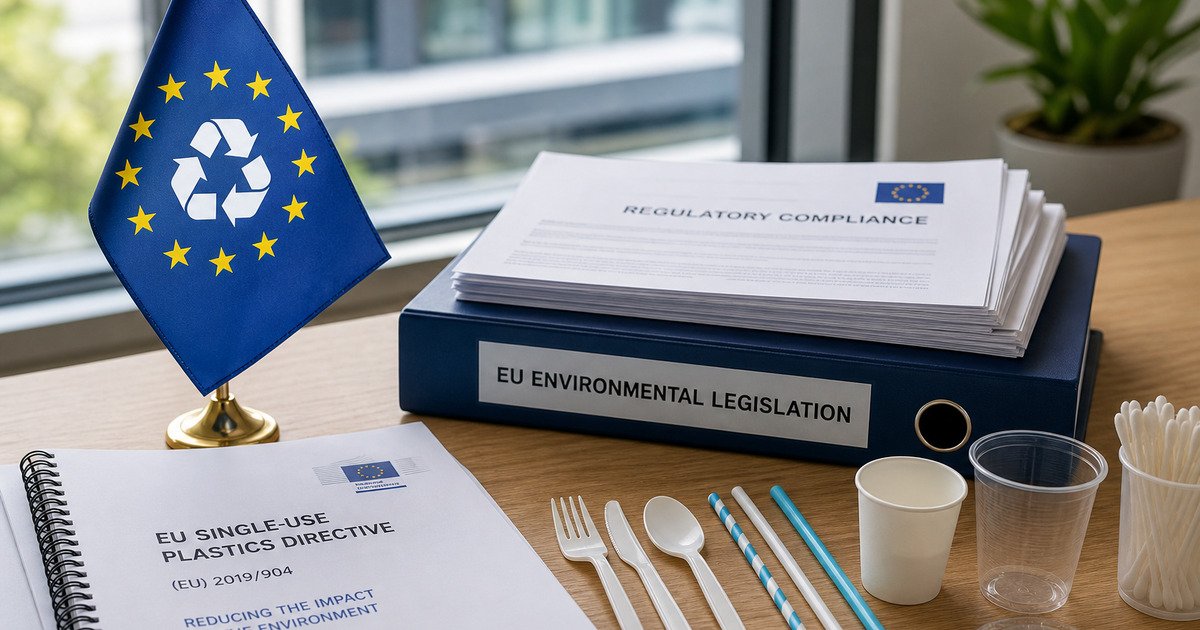
The European Union continues to lead the global fight against plastic pollution with updated and expanded regulations on single-use plastics that took effect in 2025. The strengthened rules build on the groundbreaking Single-Use Plastics (SUP) Directive and create unprecedented market opportunities for bioplastic alternatives across the European market.
The Regulatory Landscape
The EU’s SUP Directive, first adopted in 2019, targeted the 10 single-use plastic items most commonly found on European beaches. The 2025 updates significantly expand the scope and stringency of these rules, introducing new measures designed to accelerate the transition away from single-use plastics and toward sustainable alternatives.
The 10 product categories originally addressed by the Directive include cotton bud sticks, cutlery, plates, straws and stirrers, balloons and sticks, food containers, beverage cups, beverage containers, cigarette butts, plastic bags, packets and wrappers, and wet wipes. These items, alongside fishing gear, represent approximately 70% of all marine litter in the EU.
Key Regulatory Changes for 2025
The updated regulations introduce several critical changes that directly impact bioplastics manufacturers and the broader packaging industry:
Extended Producer Responsibility (EPR)
The 2025 rules significantly strengthen Extended Producer Responsibility schemes, requiring producers to bear the full cost of waste management, cleanup, and awareness-raising measures for single-use plastic products. This creates a powerful economic incentive to switch to alternatives that are easier to manage at end of life.
Mandatory Recycled Content
New mandatory recycled content requirements for plastic packaging are driving demand for bio-based alternatives that can meet sustainability targets without relying on mechanical recycling infrastructure that remains underdeveloped in many member states.
Restrictions on Oxo-Degradable Plastics
The EU has imposed comprehensive restrictions on oxo-degradable plastics — products that fragment into microplastics rather than truly biodegrading. This ban validates the importance of certified biodegradable and compostable alternatives that fully break down without harmful residues.
Labeling Requirements
Updated labeling requirements ensure that consumers can clearly identify genuinely sustainable products. The EU has strengthened standards for claims of biodegradability and compostability, preventing greenwashing and giving certified bioplastics products a competitive advantage.
Market Impact on Bioplastics
The regulatory changes are creating a significant demand surge for bioplastic alternatives across multiple sectors:
- Food service — Compostable cutlery, plates, cups, and food containers are replacing banned single-use plastic items across the EU’s food service industry
- Packaging — Certified biodegradable packaging films and flexible packaging are gaining market share as brands seek compliant alternatives
- Agriculture — Biodegradable mulch films and plant pots offer sustainable alternatives to conventional plastic products used in farming
- Retail — Compostable carrier bags and packaging are increasingly mandated or incentivized across EU member states
Industry analysts estimate that the EU’s SUP regulations alone could create a market worth several billion euros for bioplastic alternatives over the next five years.
The PPWR: A New Regulatory Framework
Complementing the SUP Directive, the EU’s new Packaging and Packaging Waste Regulation (PPWR), which came into force in February 2025, replaces the previous Packaging Directive with more comprehensive and binding rules. The PPWR introduces:
- Packaging reduction targets — Binding targets to reduce packaging waste per capita by 5% by 2030 and 15% by 2040
- Reuse targets — Mandatory reuse targets for various packaging categories
- Recyclability requirements — All packaging must be recyclable by 2030 and effectively recycled at scale by 2035
- Recycled content mandates — Minimum recycled content requirements for contact-sensitive plastic packaging
The PPWR creates additional opportunities for bioplastics that meet its sustainability criteria, particularly compostable packaging for food-contaminated applications where mechanical recycling is impractical.
Bioplastics Certification Matters
With stricter regulations comes increased scrutiny of environmental claims. The EU has moved to standardize certification for biodegradable and compostable products, with EN 13432 (the European standard for compostable packaging) becoming an increasingly important compliance benchmark.
Bioplastics producers whose products carry recognized certifications — such as theSeedling logo from European Bioplastics or the OK Compost mark from TÜV Austria — are well-positioned to capitalize on the regulatory shift, as brands and retailers seek compliant alternatives they can trust.
Investment and Innovation Response
The regulatory push is driving significant investment in bioplastics production capacity and innovation across Europe. Major producers including Novamont, BASF, Corbion, and TotalEnergies Corbion have announced capacity expansions to meet growing demand for certified compostable and biodegradable materials.
Meanwhile, startups and technology companies are developing new bioplastic formulations specifically designed to meet regulatory requirements for food contact, compostability, and marine biodegradability.
A Model for Global Policy
The EU’s approach to single-use plastics regulation is increasingly serving as a model for policy development worldwide. Countries across Asia, North America, and Latin America are developing similar regulations, creating a global market opportunity for bioplastics producers that can meet European standards.
Looking Forward
As the 2025 regulations take full effect and enforcement intensifies across member states, the economic case for switching to certified bioplastic alternatives continues to strengthen. Companies that proactively invest in sourcing and developing compliant sustainable materials will be best positioned to navigate the evolving regulatory landscape and capture market share from competitors still reliant on conventional plastics.
The EU’s regulatory leadership on single-use plastics demonstrates that ambitious environmental policy and economic opportunity can be aligned — creating a powerful engine for the growth of the bioplastics industry.
Source
For more information, visit: European Commission - Single-Use Plastics