Polymateria Technology Enables Full Biodegradation of PE and PP Packaging Without Microplastics
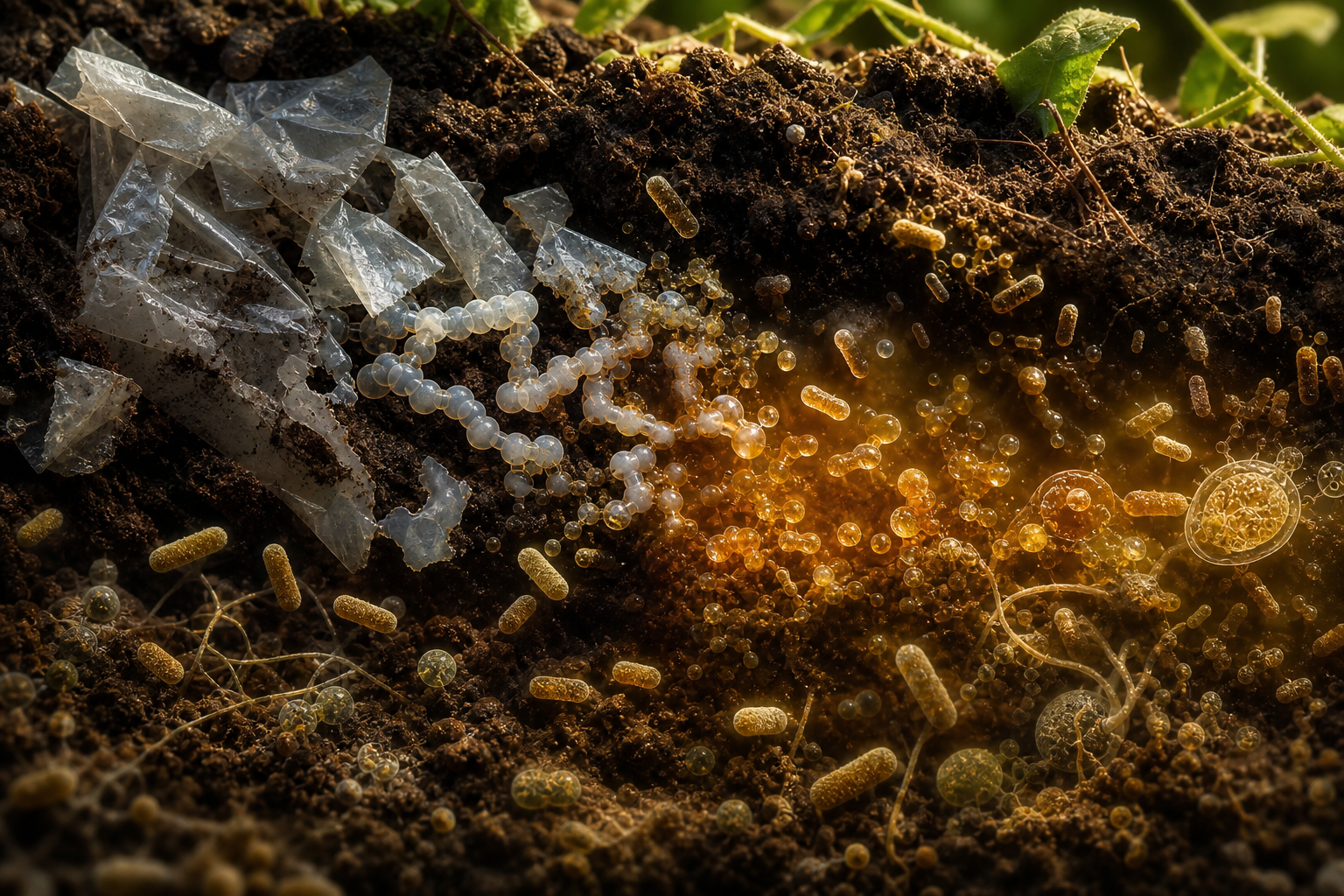
LONDON — Research conducted by Polymateria alongside Imperial College London and the Standard and Industrial Research Institute of Malaysia (SIRIM) has demonstrated that polyethylene (PE) and polypropylene (PP) packaging incorporating Polymateria’s biotransformation technology can fully biodegrade in open terrestrial environments within two years, without leaving microplastics or toxic residues. The peer-reviewed findings, published in Nature’s npj Materials Degradation, represent a significant advance in addressing plastic pollution from polyolefin packaging — the world’s most widely used plastics.
“The research shows that the technology causes a chemical transformation to take place whereby the plastic is transformed into a bioavailable wax, with no microplastics or toxic residues,” said Dr. Florence Huynh, Vice President of Innovations at Polymateria and one of the researchers behind the study. “The process is triggered by the natural elements of decay — sunlight, heat, moisture, and air. The bioavailable wax is then consumed by microbes that naturally occur in soil, fully returning the plastic to nature.”
Testing conducted by SIRIM, Malaysia’s governmental testing and certification body, recorded PE biodegradation in 292 days and PP in 269 days, with microbes consuming the resulting bioavailable wax. The research points to the complete consumption of the wax by microbes as measured through biodegradation testing, resulting in a lack of traces of the original material.
Dr. Jose Jimenez Zarco, research lead and associate professor in Synthetic Biology at Imperial College London, commented: “Uncovering pathways through which polyolefin plastics can fully biodegrade is a remarkable discovery. We now know how plastic materials previously thought to be almost indestructible can safely return to nature. We are excited to see this approach have a real-world impact on tackling plastic pollution.”
The technology is integrated into plastics at the point of manufacture with no need for changes to processes or new equipment. “This makes it immediately scalable by plastic producers around the world and cost-effective,” Huynh explained. The approach differs fundamentally from conventional compostable plastics, which require managed environments with collection and transfer to industrial composting facilities.
Huynh highlighted how Polymateria’s technology compares to conventional biodegradable or compostable plastics: “Compostable plastics require the same level of biodegradation, but operate in a managed environment requiring collection and transfer to industrial composting facilities where those are available to biodegrade.” The research followed the BSI PAS 9017 standard, published by the British Standards Institution, which provides a credible and robust approach for biodegradation in the open terrestrial environment, requiring proof of full biodegradation, no microplastics, and no toxic residues. This standard underpins the SIRIM ECO 098 Ecolabel certification in Malaysia.
The main limitations of the technology are that it is not recommended for plastics where a very long life is needed, such as in the automobile industry, and it is not designed for plastics like polystyrene or PVC, which would risk becoming toxic to the environment if they biodegrade.
At the Packaging Innovation 2026 trade show, Polymateria and eGreen International presented their bio-based and “biotransformable” VeriGreen Plus cup featuring the technology. Celine Moreira, global partnership director at Polymateria, said the packaging industry is now at a point where the era of pilots needs to end and give way to technologies that can “truly scale, integrate with circular systems, and deliver measurable outcomes.”
The research has particular relevance for Malaysia, where Deputy Minister of Natural Resources and Environmental Sustainability Syed Ibrahim Syed Noh has asserted that private sector participation is critical to achieving the country’s climate commitments. According to the Malaysia Plastics Sustainability Roadmap (2021–2030), a significant proportion of plastics in Malaysia are not recycled or managed through appropriate end-of-life pathways, contributing to leakage into the environment.
Muhammad Zuhayr, senior researcher at SIRIM, said: “We are proud to have contributed to this research with Imperial College London and Polymateria. This highlights the importance of continuing to strengthen waste management systems while expanding the availability of sustainable material solutions. Alongside a range of national initiatives, credible alternatives such as biodegradable plastics can play an important role in supporting Malaysia’s transition toward a more circular plastics economy.”
Last year, Malaysia’s Federal Government tightened its packaging waste import law, requiring all scrap plastic imports to be approved by SIRIM regardless of country of origin. Liviana Zorzi, Asia regional specialist at the World Economic Forum’s Global Plastic Action Partnership, highlighted that members of the Association of Southeast Asian Nations are advancing toward a harmonized extended producer responsibility (EPR) framework to regulate plastic packaging use.
Polymateria’s biotransformation technology offers a new pathway for polyolefin packaging — which accounts for a substantial share of global plastic production — to biodegrade safely in the open environment when waste management systems fail. As regulatory pressure mounts on plastic packaging worldwide, technologies that address end-of-life leakage without requiring perfect collection infrastructure may play an increasingly important role in the transition to a circular plastics economy.
Source: Packaging Insights article “Polymateria tech enables ‘full’ biodegradation of PE and PP packaging,” August 14, 2026, by Milana Nikolova.