PLASTICE Project Advances Pilot Plant for Microwave-Assisted Pyrolysis of Mixed Plastic Waste
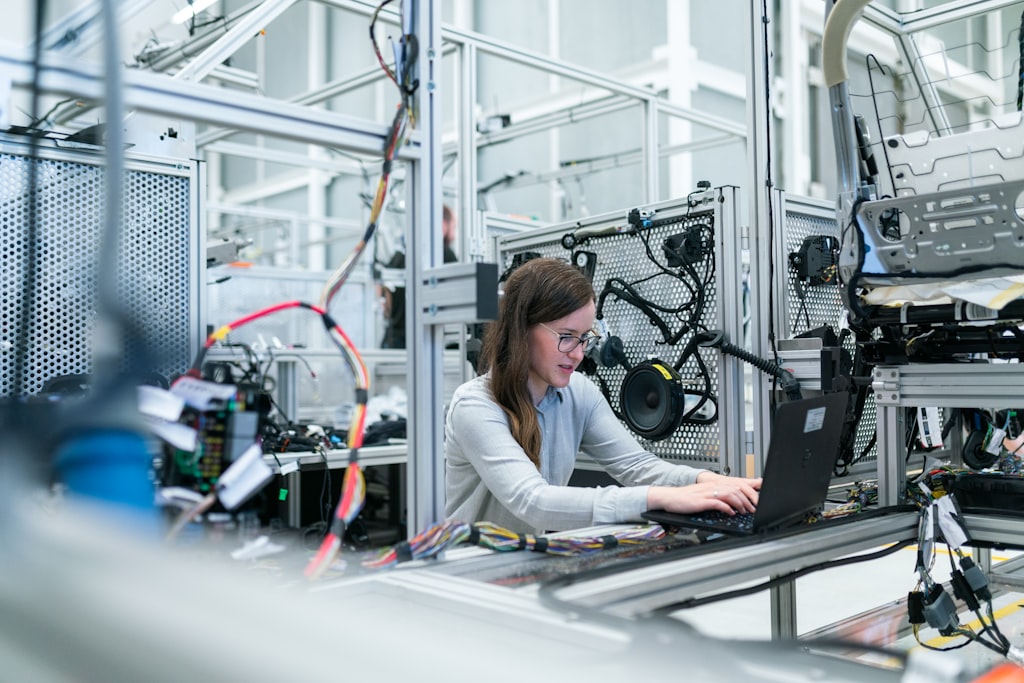
The European Union-funded PLASTICE project has reached a critical milestone in its mission to develop chemical recycling technologies for hard-to-recycle plastic waste. A transportable pilot reactor system for microwave-assisted pyrolysis has been assembled and is currently being shipped from India to Spain, where it will be commissioned at the COGERSA waste management facility in the Asturias region this summer.
The PLASTICE consortium, coordinated by Fundación CIRCE and comprising 25 partners across Europe and India, is developing four complementary valorisation pathways for complex plastic waste streams: cascade enzymatic hydrolysis, combined gasification and chemical post-treatment, hydrothermal liquefaction, and microwave-assisted pyrolysis. The pilot reactor now en route to Spain represents the microwave pyrolysis (MW-PYR) demonstration site, one of four demo-sites being deployed across the project.
Dr. Raveendran, leading the microwave pyrolysis work package at the University of Amsterdam’s HIMS institute, described the development trajectory: “Over the past few years, the team has developed and tested novel nanostructured solid catalysts that enable efficient processing of the plastic feedstock. Laboratory experiments have shown that after just 30 minutes of reaction, the process yields three products: gas, oil, and char. The char is then filtered out, the water is recovered and reused, and the oil is separated — clean, ready, and with real potential as a feedstock for new plastics.”
The laboratory research programme included kinetic studies, computational fluid dynamics (CFD) modelling, techno-economic analyses, and investigations into the utilisation of process by-products. Results have been published in leading international journals, establishing a scientific foundation for the scale-up phase.
“We have gained a deep insight into the process and are confident that it merits scaling up to industrially relevant volumes. That’s why we have now designed and manufactured a pilot reactor system as a first important step towards actual application,” Dr. Raveendran stated.
The pilot unit has been designed as a skid-mounted, transportable system to facilitate deployment at the COGERSA site. COGERSA, a public waste management company, will provide access to “real-life” plastic waste streams — including contaminated, mixed, and multilayer materials that represent the most challenging fractions for mechanical recycling. This operational environment will test the technology’s robustness against the variability and contaminants inherent in post-consumer waste.
Dr. Raveendran acknowledged the challenges ahead: “Our lab experiments already included actual plastic waste, but we will certainly encounter challenges we could not fully foresee. That is precisely the purpose of this scale-up phase — to move the technology toward genuine industrial relevance.”
The PLASTICE project, funded under Horizon Europe grant agreement No 101058540, is a member of ECOSYSTEX, the European network of projects focused on textile sustainability and circularity. The microwave pyrolysis demo-site at CIRCE’s laboratories in Zaragoza has also been advancing in parallel, with new reactor configurations under development to optimise energy efficiency and product selectivity.
The project’s multi-technology approach reflects a growing consensus that no single recycling technology can address the full spectrum of plastic waste. Microwave-assisted pyrolysis offers particular advantages for mixed and contaminated streams: the volumetric heating mechanism enables rapid, uniform temperature distribution, while the process can tolerate higher levels of contamination than conventional pyrolysis. The nanostructured catalysts developed by the team further enhance selectivity toward valuable hydrocarbon fractions.
If the pilot demonstration proves successful, the consortium aims to de-risk the technology for commercial deployment by 2028-2030. The techno-economic analyses conducted during the laboratory phase suggest that microwave pyrolysis could achieve cost parity with virgin plastic production at scale, particularly when accounting for avoided landfill and incineration costs and potential carbon credits.
The PLASTICE consortium includes academic partners (University of Amsterdam, CIRCE, others), technology providers, waste management companies (COGERSA, others), and end-users from the chemical and plastics industries. This full value-chain representation is designed to ensure that the technologies developed meet both technical and market requirements.
Source: PLASTICE project updates, June 2024; bioplastics MAGAZINE, June 2026.