NaturePlast Valorises Marine Resources: Sea Shells, Algae, and Starfish Feedstock for Bioplastics
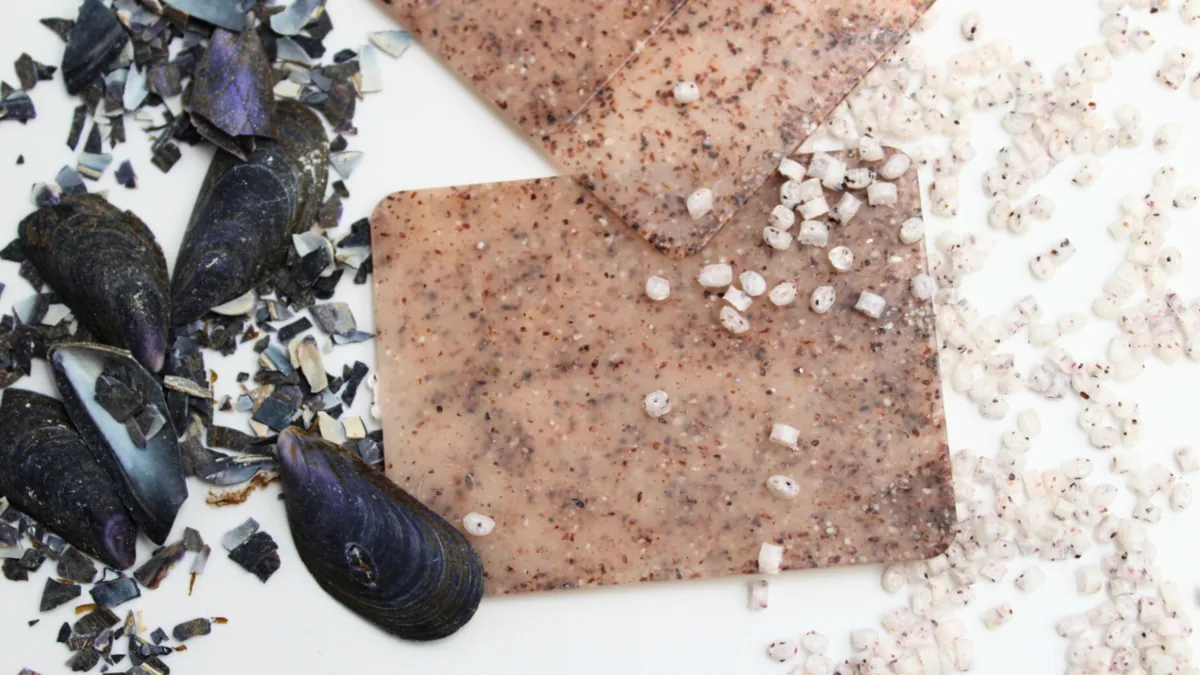
MONDEVILLE, France — As France’s 2025 Year of the Mer (Année de la Mer) draws national attention to ocean preservation and the sustainable valorisation of marine resources, French bioplastics specialist NaturePlast is already putting these principles into practice — transforming marine by-products into innovative bioplastic materials.
From Ocean Waste to Bioplastic Feedstock
For several years, NaturePlast has been developing a range of bioplastics incorporating co-products sourced from the sea: oyster shells, mussel shells, scallop shells, and algae. These materials, often treated as waste by the aquaculture and fishing industries, are given a second life in NaturePlast’s bioplastic formulations.
The sourcing process is deliberately local and responsible:
- Shells are collected regionally, primarily from Normandy and Brittany — two of France’s most important shellfish farming regions
- Algae is sourced from desilting operations in Scandinavian canals, where it is removed to maintain waterway navigation
- All co-products are cleaned, dried, and ground while preserving their distinctive natural appearance
- The processed materials are then incorporated into bioplastic compounds, creating materials with unique visual and tactile properties
Why Marine Co-Products?
The rationale is both environmental and economic. Shellfish farming and seafood processing generate significant volumes of shell waste that are largely underexploited and often destined for landfill. By incorporating these materials into bioplastics, NaturePlast avoids disposal while creating value-added materials with distinctive characteristics:
- A differentiated visual finish: pearly, granular, or mineral textures that set products apart
- Local and responsible origin: traceable sourcing from regional industries
- Circular economy alignment: waste becomes feedstock, closing the loop
The FILASTERID Project: Starfish as a Resource
NaturePlast’s marine resource strategy extends beyond shells. The company is a partner in the FILASTERID project, an interregional initiative aimed at structuring a complete value chain for starfish valorisation — an abundant but largely unexploited biomass on Brittany’s coasts.
Starfish (Asterias rubens and Marthasterias glacialis) are proliferating along French coastlines, causing significant problems for shellfish farmers through predation and fishing equipment damage. Captured accidentally in nets, they currently die and go to waste.
FILASTERID aims to transform this biomass into useful resources across three complementary pathways:
- Animal nutrition (organic fraction)
- Plant nutrition (bioactive extracts)
- Biomaterials: functionalised fillers for bio-based and/or biodegradable polymers (mineral fraction)
NaturePlast leads the biomaterials workstream, processing the mineral skeleton of starfish through grinding, micronisation, and sieving before incorporating it into polymer formulations. Remarkably, the starfish skeleton reveals a porous, tunnel-rich microstructure under magnification — similar to Emmental cheese — that can be loaded with active ingredients such as essential oils.
Potential applications include anti-mosquito bracelets where the active ingredient is encapsulated directly into the material, and gardening accessories that slowly release pest-repelling substances for crops.
A Broader Vision
The FILASTERID project brings together multiple partners: Agro Innovation International (CMI Roullier) as project lead, the Muséum National d’Histoire Naturelle’s Concarneau marine station for biological expertise, Université de Bretagne Sud’s ComposiTIC platform for materials characterisation, and NaturePlast for biopolymer formulation and processing. The project runs through 2028.
Why It Matters
NaturePlast’s marine resource strategy exemplifies how the bioplastics industry can move beyond conventional agricultural feedstocks to explore underexploited biological resources — particularly those that address environmental problems while creating economic value. With France’s Year of the Sea putting ocean sustainability in the spotlight, NaturePlast’s work offers a compelling model for circular bioeconomy innovation. | FILASTERID Project