Braskem-Sojitz plan $400M bio-based feedstocks plant in Indiana
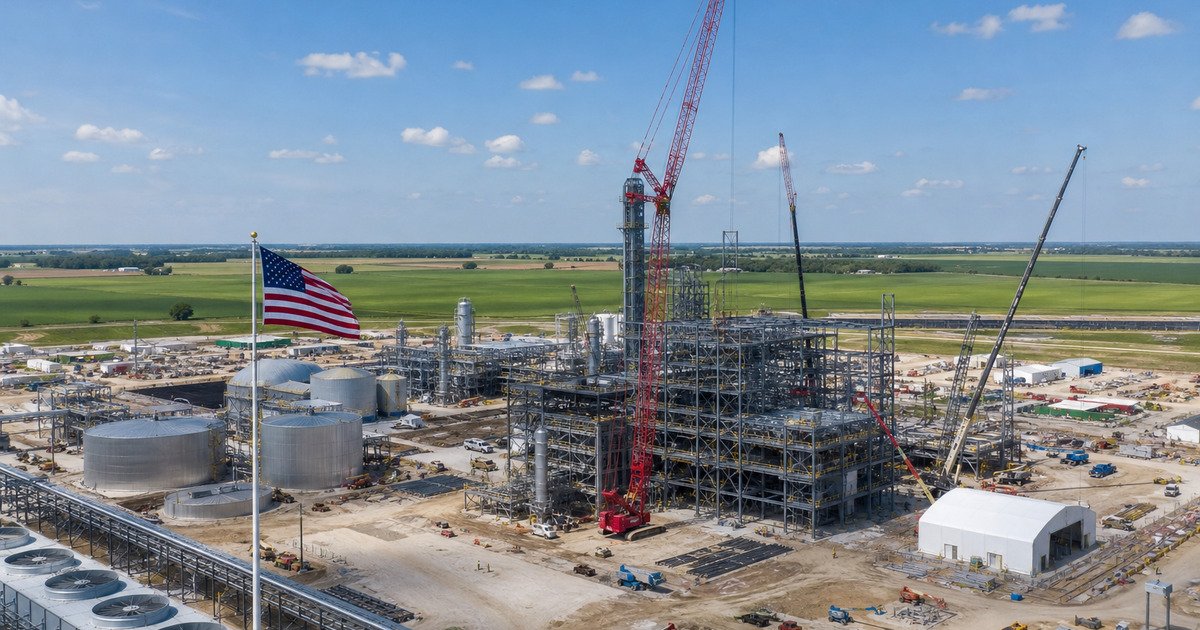
In a landmark investment for the North American bioplastics industry, Braskem SA — the world’s largest producer of bio-based polyethylene — and Sojitz Corporation, the Japanese trading and investment giant, have announced plans for a $400 million joint venture facility in Lafayette, Indiana. The plant will produce bio-based plastic feedstocks, significantly expanding sustainable materials capacity in the region.
The Joint Venture
The partnership combines Braskem’s world-leading expertise in bio-based polyethylene production with Sojitz’s extensive experience in global supply chain management and investment in sustainable technologies. The joint venture structure allows both companies to share the substantial capital investment while leveraging their respective strengths.
Braskem brings its proprietary technology for converting sugarcane ethanol into green polyethylene — a process the company has operated at commercial scale in Brazil since 2010. Sojitz contributes its deep relationships across Asian and North American markets, as well as its experience in developing and operating large-scale industrial facilities.
Lafayette, Indiana: Strategic Location
The Lafayette site was selected for several strategic advantages:
- Proximity to feedstock sources — Indiana’s position in America’s agricultural heartland provides access to abundant corn and other biomass feedstocks that can be converted to bio-based ethanol
- Transportation infrastructure — Lafayette’s location along major rail and highway corridors facilitates efficient distribution of finished products across North America
- Industrial ecosystem — The region’s established manufacturing base provides access to skilled labor, suppliers, and supporting infrastructure
- Supportive policy environment — Indiana state and local economic development incentives support investment in advanced manufacturing and sustainable technologies
The $400 Million Investment
The planned $400 million facility represents one of the largest investments in bio-based chemical production in North America. The plant will produce bio-based ethanol and its derivatives for use as feedstocks in bioplastics manufacturing.
The facility’s output will serve multiple markets:
- Green polyethylene — Bio-based PE for packaging, consumer goods, and industrial applications
- Bio-based ethylene — A key building block for various chemical products
- Sustainable feedstocks — Supplying other bioplastics manufacturers with renewable raw materials
The investment is expected to create hundreds of direct jobs in the Lafayette area, with additional indirect employment in construction, logistics, and supporting services.
Braskem’s Global Bio-Based Leadership
Braskem, headquartered in São Paulo, Brazil, has been the global pioneer in large-scale bio-based polyethylene production. The company’s Triunfo complex in southern Brazil has been producing green polyethylene from sugarcane ethanol since 2010, with an annual capacity of 200,000 tonnes.
The Indiana facility represents Braskem’s first major bio-based production investment outside Brazil and signals the company’s commitment to serving the North American market with locally produced sustainable materials. It also diversifies the company’s feedstock base beyond sugarcane to include North American agricultural products.
Sojitz’s Sustainability Strategy
For Sojitz, the joint venture aligns with the company’s broader sustainability strategy and its commitment to investing in businesses that contribute to a low-carbon economy. Sojitz has been actively expanding its portfolio of sustainable investments across multiple sectors, including renewable energy, sustainable materials, and circular economy businesses.
The partnership with Braskem provides Sojitz with a platform to participate in the rapidly growing North American bioplastics market while contributing its expertise in project development and supply chain management.
Market Drivers
Several converging factors make this investment particularly timely:
- Growing demand for sustainable packaging — North American brand owners and retailers are under increasing pressure to reduce the environmental impact of their packaging, driving demand for bio-based alternatives
- Regulatory momentum — While the US lacks federal single-use plastic regulations comparable to the EU’s SUP Directive, several states have enacted or are considering restrictions on conventional plastics
- Corporate sustainability commitments — Major consumer goods companies have pledged to increase the recycled and bio-based content of their packaging, creating guaranteed demand for bio-based feedstocks
- Carbon pricing trends — The potential introduction of carbon pricing mechanisms in North America would further improve the competitiveness of bio-based materials
Impact on the North American Bioplastics Market
The Indiana facility will significantly expand the availability of bio-based feedstocks in North America, where demand for sustainable materials has outpaced domestic supply. Currently, many North American bioplastics manufacturers rely on imported bio-based feedstocks, adding cost and supply chain complexity.
The facility’s output will help close this supply gap, enabling faster growth of the North American bioplastics industry and supporting the sustainability goals of major brand owners and packaging converters.
Environmental Benefits
The environmental case for bio-based feedstocks is compelling:
- Carbon reduction — Bio-based polyethylene can reduce greenhouse gas emissions by up to 70% compared to fossil-based equivalents, as the sugarcane or corn feedstock absorbs CO2 during growth
- Renewable sourcing — Feedstocks come from annually renewable agricultural crops rather than finite petroleum reserves
- End-of-life options — Bio-based PE is chemically identical to fossil-based PE and can be recycled in existing PE recycling streams
- Reduced fossil dependence — Every tonne of bio-based PE produced displaces approximately 1.8 tonnes of petroleum
Looking Ahead
The Braskem-Sojitz joint venture represents a significant step forward in the commercialization of bio-based materials in North America. As the facility moves from planning through construction and into operation, it will serve as a proof point for the economic viability of large-scale bio-based chemical production outside of Brazil.
The project also signals growing confidence among major industrial investors that the transition to sustainable materials is not just an environmental imperative but a sound business opportunity.
Source
For more information, visit: Braskem announcement