Blue Circle Olefins secures funding for ProjectNL in Rotterdam
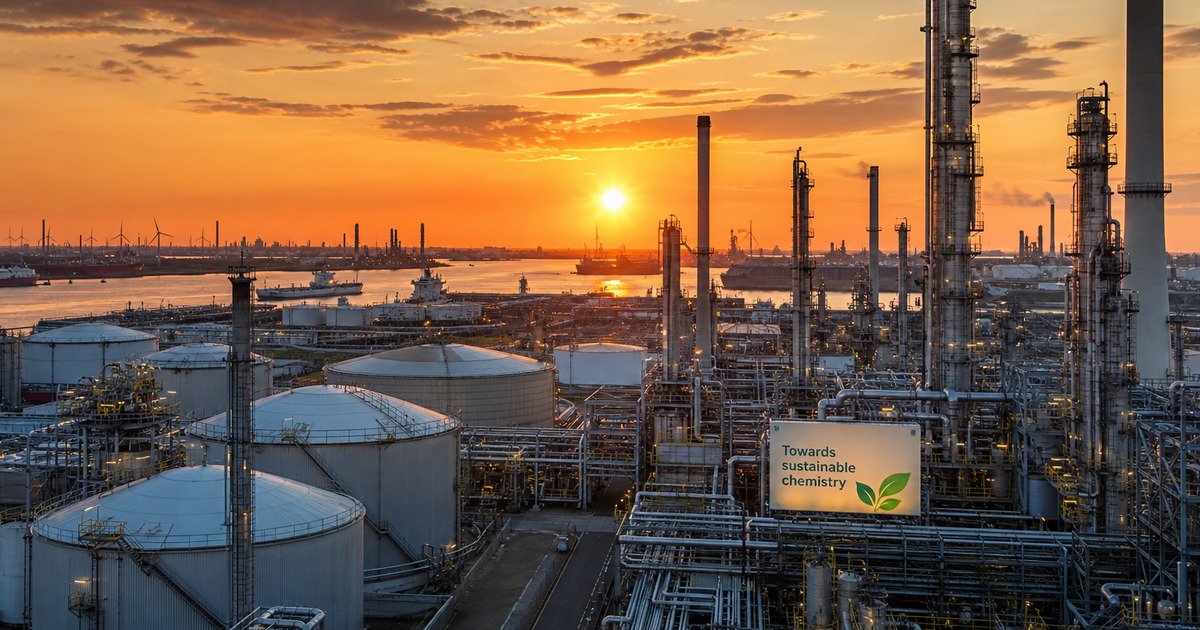
Blue Circle Olefins, a Dutch company pioneering sustainable chemical production, has secured the funding needed to advance ProjectNL — an ambitious commercial-scale Methanol to Olefins (MTO) production facility in Rotterdam, Netherlands. The facility aims to produce sustainable olefins from renewable methanol, creating a new pathway for bio-based plastics production.
ProjectNL: A Green Chemistry Breakthrough
ProjectNL represents a potentially transformative approach to producing the chemical building blocks that form the foundation of the plastics industry. Olefins — primarily ethylene and propylene — are the most widely produced petrochemicals globally, serving as feedstocks for everything from polyethylene and polypropylene to countless other plastic products.
The conventional production process cracks petroleum-derived naphtha at high temperatures to produce olefins, a process that is both energy-intensive and carbon-heavy. Blue Circle Olefins’ alternative approach uses renewable methanol as a feedstock in a catalytic conversion process that significantly reduces the carbon footprint of olefin production.
The methanol-to-olefins process works by first dehydrating methanol to form dimethyl ether (DME), which is then converted over a specialized catalyst into light olefins. When the methanol itself is derived from renewable sources — such as captured CO2 and green hydrogen, or from biomass gasification — the resulting olefins can be considered bio-based or even carbon-negative.
Strategic Location in Rotterdam
Rotterdam’s position as Europe’s largest petrochemical hub makes it an ideal location for ProjectNL. The city’s port infrastructure provides efficient access to global supply chains, while the existing petrochemical cluster offers potential integration opportunities with downstream users of olefins.
Rotterdam’s commitment to becoming a green chemistry hub aligns with Blue Circle Olefins’ mission. The Rotterdam Climate Agreement and the Port of Rotterdam Authority’s strategy to lead the energy transition provide a supportive policy and infrastructure environment for sustainable chemical production.
Funding and Investment
The funding secured for ProjectNL will advance the project from its current development phase toward construction of the commercial-scale facility. The investment reflects growing investor confidence in the commercial viability of sustainable chemical production technologies and the long-term demand for bio-based chemical feedstocks.
ProjectNL has attracted interest from both strategic and financial investors who recognize the potential of MTO technology to disrupt the traditional petrochemical value chain. The technology addresses two critical market needs simultaneously: decarbonization of chemical production and diversification of feedstock sources away from fossil fuels.
Market Context: The Push for Bio-Based Chemicals
The chemicals industry faces mounting pressure to reduce its carbon footprint. Petrochemical production accounts for approximately 7% of global greenhouse gas emissions (including both energy use and feedstock emissions), and olefins production is one of the largest contributors within this sector.
Multiple factors are driving demand for bio-based olefins:
- Brand owner commitments — Major consumer goods companies have pledged to increase the bio-based content of their packaging and products, creating demand for bio-based plastic feedstocks
- Regulatory requirements — The EU’s Carbon Border Adjustment Mechanism (CBAM) and other carbon pricing initiatives are making fossil-derived chemicals relatively more expensive
- Investor ESG requirements — Financial institutions increasingly require chemical companies to demonstrate credible decarbonization pathways
- Supply chain security — Diversifying feedstock sources away from petroleum reduces exposure to oil price volatility and geopolitical supply risks
Technology Advantages
Blue Circle Olefins’ MTO technology offers several key advantages over conventional olefin production:
- Lower carbon footprint — When using renewable methanol, the process can reduce CO2 emissions by up to 70% compared to naphtha cracking
- Feedstock flexibility — The process can use methanol from multiple renewable sources, including green methanol (from CO2 capture and green hydrogen), biomethanol (from biomass), and captured carbon
- Scalability — The modular nature of MTO technology allows for scalable deployment, from small regional plants to world-scale facilities
- Integration potential — The facility can be integrated with renewable hydrogen production and CO2 capture infrastructure, creating a circular carbon economy
Competition and Industry Context
Blue Circle Olefins is not alone in pursuing sustainable olefin production. Several major chemical companies and startups are developing alternative routes to bio-based olefins, including:
- Ethanol-to-ethylene — Converting bioethanol to ethylene, already commercial at scale by companies like Braskem
- CO2-to-methanol — Several companies are developing direct CO2-to-methanol processes that could feed MTO plants
- Biomass gasification — Gasifying biomass to produce syngas, which can then be converted to methanol and subsequently olefins
However, Blue Circle Olefins’ focus on the Rotterdam location and the specific MTO pathway gives the company a distinctive position in this emerging competitive landscape.
Implications for the Bioplastics Industry
The availability of bio-based olefins would be transformative for the bioplastics industry. Currently, most bioplastics are based on fermentation products (like PLA from lactic acid) or direct biological production (like PHA from bacterial fermentation). Bio-based polypropylene and polyethylene — the world’s two most widely used plastics — remain largely unavailable at commercial scale.
ProjectNL has the potential to change this equation, providing bio-based propylene that could be polymerized into bio-polypropylene for applications ranging from packaging to automotive components to consumer goods.
Looking Ahead
As ProjectNL advances toward commercial operation, it will provide crucial proof of concept for the large-scale production of sustainable olefins. Success in Rotterdam could catalyze similar projects at other petrochemical hubs worldwide, accelerating the decarbonization of the entire chemicals value chain.
Source
For more information, visit: Blue Circle Olefins ProjectNL