Bioplastic Mulch Films Under the Microscope: Separating Science from Scaremongering
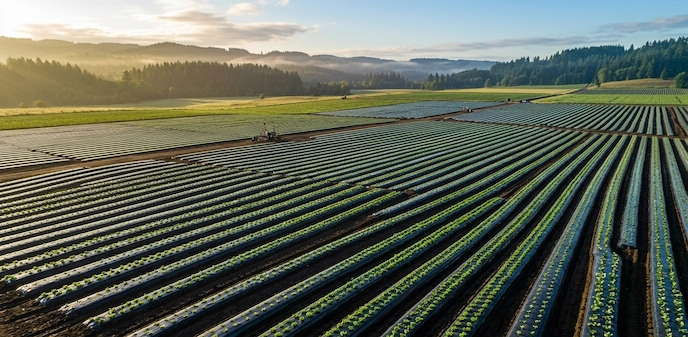
Walk into any serious horticultural operation in Europe and you will see it everywhere: thin plastic film stretched over raised beds, suppressing weeds, conserving moisture, and warming soil to extend the growing season. Plastic mulch film has been an agricultural staple since the 1950s, and for good reason — it works. The global market for agricultural mulch films exceeds 3 million tons annually, with China alone applying an estimated 50–260 kg per hectare in some intensively farmed regions.
The problem, as every farmer also knows, is what happens at the end of the season. Conventional polyethylene film doesn’t go away. Left in fields, it fragments into persistent microplastics that remain in soil for decades. Collected and sent to landfill — the fate of most used mulch film — it simply moves the problem. Biodegradable plastic mulch films emerged as a serious alternative: materials designed to be tilled into the soil after harvest, where microorganisms were supposed to consume them completely.
Now the backlash has arrived. A growing body of research claims that even biodegradable mulch films generate microplastics, release toxic chemicals, and harm soil biology. Some voices are calling for an outright ban. The science, as is so often the case, is considerably more nuanced than the headlines suggest. Here is what the evidence actually shows — and what it means for farmers, regulators, and the bioplastics industry.
What “Bioplastic Mulch Film” Actually Means — and Why It’s Not One Thing
Before evaluating any claim about biodegradable mulch films, it is essential to understand that the term covers a remarkably diverse range of materials. They share little beyond the “biodegradable” label — a label that, as we will see, conceals enormous variation in real-world environmental performance.
The most widely used materials in commercial biodegradable mulch films today are:
PBAT (polybutylene adipate-co-terephthalate) is the dominant polymer in the market. Critically, PBAT is not bio-based — it is a fossil-derived synthetic polyester, designed to biodegrade in soil but made from petroleum. Most commercial biodegradable mulch films, including products sold under brands like BASF’s Ecovio®, are PBAT-dominant or PBAT-blended.
PLA (polylactic acid) is bio-based, derived from corn starch or sugarcane. However, pure PLA barely degrades in open soil — it needs industrial composting at temperatures above 55°C to break down effectively. PLA is typically blended with PBAT to improve its soil-biodegradation performance.
Starch-based blends — including Novamont’s Mater-Bi, which combines thermoplastic starch with biodegradable polyesters — are among the most commercially mature soil-biodegradable options and are approved for use on organic farms in several European countries.
PHA (polyhydroxyalkanoates) are biopolyesters produced by bacterial fermentation — genuinely bio-based and biodegradable in soil, seawater, and even marine environments without toxic residues. PHA is the gold standard environmentally, but it currently commands a price premium of 3–5× over conventional resins that limits large-scale agricultural adoption.
PBS and PBSA (polybutylene succinate and its adipate copolymer) are soil-biodegradable polyesters, partially bio-based, and increasingly used in mulch film formulations.
When critics say “bioplastic mulch films generate microplastics” or “bioplastic mulch films contain harmful additives,” they are often describing PBAT-heavy formulations — not PHA, not well-formulated starch blends, and not the next generation of enzyme-embedded materials now approaching commercialisation. Treating all biodegradable mulch films as equivalent is the first and most consequential error in the public debate.
Do Bioplastic Mulch Films Create Microplastics? Yes — But Context Is Everything
This is the claim that generates the most concern, and it is largely true. Biodegradable mulch films do generate microplastics as an intermediate step during degradation. The question is whether this matters — and the honest answer is: sometimes, in some conditions, at sufficient concentrations.
The mechanism is straightforward. All biodegradable polymers must first be broken down into fragments by physical weathering and UV radiation before soil microorganisms can enzymatically depolymerize them. During this fragmentation phase, micro- and nano-sized particles are released into the soil. Studies have shown that because biodegradable films fragment faster than conventional PE, they can actually generate more microplastics than PE films within the same time period — before those particles are eventually consumed by microbes.
Research published in peer-reviewed journals confirms real ecological effects at high concentrations: shoot and root biomass in cabbages and strawberries is inhibited by exposure to biodegradable microplastics, soil nitrogen cycling is disrupted, and some soil invertebrate populations are affected. These findings are real, and the bioplastics industry should not dismiss them.
However, the critical variable is concentration. A 2024 review published in npj Materials Sustainability (Nature portfolio) found that no negative impacts on soil ecosystems have been documented at microplastic concentrations below 0.1% by weight — and that harmful effects were consistently observed only at concentrations far higher than what would be expected under normal agricultural use with proper management. Most laboratory studies use concentrations of 1% or higher to generate detectable effects, which represents extreme accumulation scenarios — not a single season of mulch film use.
There is a further crucial distinction that the microplastic debate consistently blurs: persistence. Conventional PE microplastics remain in soil essentially indefinitely — decades to centuries. Biodegradable microplastics continue to degrade and are eventually consumed by soil microorganisms. They represent a transient, not a permanent, contamination. The pathway from biodegradable mulch film fragment to fully mineralised CO₂, water, and biomass is not instant, but it is real. This is not the case for the black shards of polyethylene that accumulate to 50–260 kg per hectare in heavily mulched Chinese farmland.
The comparison that matters is not bioplastic mulch films versus no microplastics. It is bioplastic mulch films versus conventional PE — and on that comparison, biodegradable films are unambiguously better, even in their current imperfect state.
The Additive Problem: Where the Real Risk Lies
The microplastics debate gets most of the attention, but the additive story is arguably more concerning — and more actionable.
Plastic films are not pure polymer. They contain a cocktail of processing aids, stabilisers, plasticisers, pigments, and other functional chemicals. The composition and quantity of these additives are often poorly disclosed — even to farmers and regulators. And here, a counterintuitive finding emerges: because biodegradable films break down faster, they may release their additive load into the soil more rapidly than conventional PE films.
A 2025 study published in Journal of Hazardous Materials analysed films from 34 manufacturers in China and found that the total estimated chemical burden from biodegradable films on large farms was approximately 114 kg per farm — compared to around 9 kg from equivalent LDPE use. This is primarily a function of degradation rate, not additive content per se: as the film breaks down, additives leach out at a faster rate.
The additives of concern fall into several categories:
Phthalate plasticisers such as dibutylphthalate (DBP) and DEHP have been detected in agricultural soils at concentrations up to 25.2 mg/kg. These are endocrine-disrupting compounds. DEHP in particular has been found above safe thresholds in field soils following mulch film use — though conventional PE films are also a significant source.
UV stabilisers and antioxidants are added to extend the functional life of the film during the growing season. Benzophenone-based UV absorbers have half-lives in soil of 70–130 days, and some organophosphate compounds used as processing aids can persist for 190–250 days.
Heavy metal traces including copper and nickel have been detected in some formulations, typically as catalyst residues from the polymerisation process.
Pigments and colorants — most mulch films are black — can contain carbon black or organic dyes whose soil behaviour is incompletely studied.
The picture demands differentiation, not blanket alarm. Some additives biodegrade rapidly in soil: phthalate monoesters break down in less than two days. Others linger for months. The key policy implication is that additive formulations for agricultural biodegradable films should be subject to soil-safety assessment — not just the food-contact standards currently applied to the polymer matrix.
Several European manufacturers have already moved in this direction. Novamont’s Mater-Bi formulations for mulch applications are designed with restricted additive profiles, and ecotoxicity testing has found no adverse effects on soil invertebrates or microbial communities at environmentally relevant concentrations.
Degradation Products: A Material-by-Material Assessment
Beyond additives, the monomers and oligomers released as the polymer backbone degrades are themselves a legitimate environmental concern. Here, material choice matters enormously.
PBAT degradation produces adipic acid, terephthalic acid, and 1,4-butanediol as primary monomers. Research published in 2022 found that these monomers caused greater phytotoxic effects than the intact PBAT polymer itself, with terephthalic acid and butanediol nearly completely inhibiting plant germination at 1% concentration. PBAT’s degradation products — from a fossil-fuel-derived polymer — are categorised as mild-to-moderate environmental toxins, and their accumulation under repeated mulch film application on the same field is a legitimate concern that deserves more regulatory attention than it currently receives.
PLA degradation produces lactic acid, a natural metabolite found in all living organisms and readily assimilated by soil microbes and plants. Studies have found that earthworms not only tolerate PLA microplastics but actively accelerate their degradation through soil mixing, and soils amended with PLA microplastics showed lower heavy metal uptake in earthworms compared to PE-amended soils. PLA’s degradation products are environmentally benign — the problem with PLA is the rate of degradation in open soil, not the chemistry of what it produces.
PHA degradation produces hydroxy acids — natural biochemical compounds that soil microorganisms readily assimilate. Research testing aqueous extracts from PHBV (a PHA variant) degradation found no detectable phytotoxicity in germination assays with garden cress. Among commercially available mulch film materials, PHA offers the cleanest environmental profile across both degradation rate and product toxicity.
Starch component degradation produces glucose, CO₂, and water — essentially identical to the decomposition of any plant-derived organic material. The starch fraction of blended films degrades rapidly and cleanly; the co-polyester component follows the degradation pathway of whatever synthetic polymer is blended with it.
The hierarchy that emerges: PHA > starch blends > PLA > PBAT. For PBAT, the appropriate policy response is not a ban but tighter standards — restricting its use to specific crop cycles where full degradation within one season is demonstrable, mandating lower additive loadings, and accelerating the transition to bio-based alternatives.
Should Biodegradable Mulch Films Be Banned? A More Useful Question
The ban-or-not framing is the wrong question. Biodegradable mulch films in their current commercial form are imperfect. The best of them are nonetheless a material improvement over conventional PE in terms of long-term soil health. Banning them without viable large-scale alternatives would mean returning to polyethylene — a material that generates microplastics with no degradation timeline whatsoever and imposes significant removal, transport, and disposal costs on farmers.
A differentiated regulatory approach would look something like this:
Immediately prohibit oxo-degradable additives in any mulch film product. These are metal salt additives — cobalt stearate, manganese stearate — added to conventional PE or PP to cause photo-oxidative fragmentation. They are not genuinely biodegradable. They produce conventional PE microplastics at accelerated rates, and the EU has already moved to ban them in packaging. The same logic applies to agricultural applications. These products offer the worst of all worlds: the persistence of PE microplastics combined with faster physical fragmentation.
Restrict high-PBAT content formulations and require demonstration of ≥90% soil biodegradation within 24 months (per ISO 17556 or ASTM D5988) under climate conditions representative of the region where the product is sold — not just idealised laboratory conditions. Films for use in northern European climates should be tested at northern European soil temperatures, not at 25°C in a controlled chamber.
Mandate additive disclosure and soil-safety assessment for all substances included in biodegradable mulch films. The composition of additives should be publicly disclosed at formulation level, and any additive with a soil persistence half-life above 60 days should require independent ecotoxicity clearance before market approval.
Accelerate certification pathways for PHA-based and next-generation materials. The regulatory friction for genuinely superior materials — PHA and enzyme-embedded PLA — should be reduced, not maintained at the same level as PBAT blends. The EN 17033 standard for soil-biodegradable mulch films is a solid foundation; its application should be more rigorously enforced while creating a premium certification tier for materials that demonstrate both faster degradation and cleaner degradation products.
Invest in non-plastic alternatives for contexts where film mulch is least necessary. The environmental argument for biodegradable mulch film is strongest in high-value horticulture at commercial scale. For small-scale and organic systems, the case for paper mulch, straw, compost mulch, and living cover crops is compelling — and these alternatives are significantly under-resourced in agricultural extension and subsidy programmes.
Alternatives That Actually Work for Farmers
For farmers who want to move away from any form of plastic mulch — biodegradable or conventional — the alternatives are real, if imperfect:
Paper mulch biodegrades within a single season, suppresses weeds effectively, and is the most popular non-plastic alternative in grower trials. The main limitations are tearing when wet, wind displacement on open fields, and — an often-overlooked issue — some commercial paper mulches contain waxy coatings or bleaching agents that carry their own soil chemistry concerns. Source matters: paper mulch from uncoated, unbleached kraft paper is genuinely clean.
Straw and hay mulch has been the agricultural standard for centuries. It suppresses weeds effectively, retains moisture, and progressively builds soil organic matter. The labour cost for application is higher than film, weed seed contamination is a risk with non-composted straw, and it is less effective at soil warming than black film. For organic farms and mixed systems, it remains one of the most practical options at scale.
Compost mulch (applied at sufficient depth — 8–10 cm) acts as both mulch and soil amendment. It adds significant soil organic carbon over repeated applications and is most practical where large volumes of high-quality, weed-free compost are available on-site or locally.
Living mulch (cover crops maintained between crop rows) represents the most sophisticated long-term option: it builds soil biology, suppresses weeds, fixes nitrogen with legume species, and provides insect habitat. Management complexity is real — competition for water and nutrients must be handled carefully — but roll-crimping technology is making large-scale no-till living mulch systems increasingly viable.
Wool mulch remains commercially underdeveloped despite genuine promise as a durable, biodegradable, naturally pest-deterrent material. Proximity to sheep farming and the availability of low-value wool grades unsuitable for textiles will determine feasibility for individual operations.
No alternative matches black PE film for weed suppression efficiency at low cost and minimal labour — which is precisely why plastic mulch film became so dominant. The goal is not a single-material replacement but a differentiated toolkit matched to crop type, operation scale, and local conditions.
What’s Coming: The Next Generation of Mulch Film Materials
The material science is not static. Several developments are worth following closely for anyone involved in agricultural bioplastics.
Enzyme-embedded PLA represents a potential step change. In 2024, researchers at Carbios (France) published findings in Nature describing a PLA-based material in which an engineered thermostable hydrolase enzyme is embedded directly into the polymer matrix. The enzyme remains dormant during film production and use, then activates in the presence of soil moisture and moderate temperatures — breaking PLA down to lactic acid monomers within weeks rather than years. With US regulatory approval in progress and commercial scaling underway, this technology could give PLA films genuinely soil-safe degradation kinetics without requiring industrial composting infrastructure. For mulch film applications, this could fundamentally reframe PLA’s environmental story.
Bio-based PBAT alternatives. PBAT is currently fossil-derived, but bio-based synthesis routes to its constituent monomers — adipic acid, terephthalic acid, and 1,4-butanediol — are under active development. If bio-based PBAT reaches commercial scale, the carbon footprint of the most widely used biodegradable mulch polymer would improve substantially, though the degradation product toxicity question would remain.
PHA cost reduction. PHA’s price premium over PBAT is the primary barrier to wider agricultural adoption. As production scales — particularly from producers including CJ BIO, Kaneka, and Danimer Scientific — the cost gap is narrowing. A 2× premium over PE rather than the current 4–5× would make PHA-dominant mulch films commercially viable for high-value horticulture at scale.
Nitrogen-enriching functional formulations. Researchers have demonstrated PBS-PLA blends in which degradation products include nitrogenous compounds that measurably improve crop nutrition — effectively turning the mulch film into a slow-release soil amendment. This approach reframes the degradation product question from an environmental liability to an agronomic asset to be engineered.
The Bottom Line: Better Than PE, Not Good Enough Yet, Getting Better Fast
The debate over biodegradable mulch films has been framed, incorrectly, as a binary choice: bioplastics are a genuine climate solution, or bioplastics are sophisticated greenwash. The evidence supports neither claim in its strong form.
Current commercial biodegradable mulch films — dominated by PBAT and PBAT/PLA blends — do generate transient microplastics, do release additives into soil at measurable rates, and for PBAT specifically, produce degradation monomers with demonstrable phytotoxic effects at high concentrations. These are real limitations that the industry must address through better material selection, additive transparency, and more rigorous conformance to soil biodegradation standards.
At the same time, these materials are unambiguously better than conventional polyethylene on the metrics that matter most for long-term agricultural soil health. They do not leave a permanent microplastic legacy. They do not accumulate across seasons at the scale documented in heavily mulched farmland. They eliminate the labour and landfill burden of film removal. For farmers who use plastic mulch — and the agronomic and economic reality is that many will continue to do so — the move from PE to a certified soil-biodegradable film represents a genuine environmental improvement, not a substitution of one problem for another.
The path forward is differentiated regulation, honest material hierarchy, and continued investment in genuinely cleaner alternatives. That means accelerating PHA adoption, tightening additive standards, restricting the highest-risk PBAT formulations, and building practical alternatives for contexts where film mulch is least essential.
What it does not mean is returning to polyethylene because the alternatives are imperfect. In soil health, as in most environmental questions, the comparison that matters is the available alternative — not the imaginary ideal.
Sources
- Yu, Y. & Flury, M. (2024). Unlocking the Potentials of Biodegradable Plastics with Proper Management and Evaluation at Environmentally Relevant Concentrations. npj Materials Sustainability, 2(1), 9. https://doi.org/10.1038/s44296-024-00012-0
- Fan, X. et al. (2024). Effects of microplastics derived from biodegradable mulch film on different plant species growth and soil properties. Science of the Total Environment. https://doi.org/10.1016/j.scitotenv.2024.050496
- Liu, L. et al. (2022). The long-term uncertainty of biodegradable mulch film residues and associated microplastics pollution on plant-soil health. Journal of Hazardous Materials, 443, 130148. https://doi.org/10.1016/j.jhazmat.2022.018490
- Bandopadhyay, S. et al. (2018). Biodegradable Plastic Mulch Films: Impacts on Soil Microbial Communities and Ecosystem Functions. Frontiers in Microbiology, 9, 819. https://doi.org/10.3389/fmicb.2018.00819
- Xu, W. et al. (2025). Higher potential leaching of inorganic and organic additives from biodegradable compared to conventional agricultural plastic mulch film. Journal of Hazardous Materials. https://doi.org/10.1016/j.jhazmat.2025.000597
- Dissanayake, P.D. et al. (2024). Effects of biodegradable poly(butylene adipate-co-terephthalate) and poly(lactic acid) plastic degradation on soil ecosystems. Soil Use and Management, 40(2). https://doi.org/10.1111/sum.13055
- Guicherd, M. et al. (2024). An engineered enzyme embedded into PLA to make self-biodegradable plastic. Nature, 631, 884–890. https://doi.org/10.1038/s41586-024-07709-1
- Candlen, R. et al. (2025). Biodegradable Poly(butylene adipate-co-terephthalate)/Poly(lactic) Acid Mulch Film with Soy Waste Filler for Improved Biodegradation and Plant Growth. Advanced Energy and Sustainability Research. https://doi.org/10.1002/aesr.202500068
- Rusetskaya, V. et al. (2025). Bioplastics in agricultural soils: Biodegradability, analytical techniques, and soil microbial impact. Journal of Hazardous Materials. https://doi.org/10.1016/j.jhazmat.2025.007612
- Sintim, H.Y. et al. (2020). Effects of biodegradable plastic film mulching on soil microbial communities in two agroecosystems. PeerJ, 8, e9015. https://doi.org/10.7717/peerj.9015
- Merino, D. et al. (2022). Biodegradable and Biobased Mulch Films: Highly Stretchable PLA Composites with Different Industrial Vegetable Waste. ACS Applied Materials & Interfaces, 14(41), 46920–46931. https://doi.org/10.1021/acsami.2c10965
- Ortega-Calvo, J.J. et al. (2023). A critical review of biodegradable plastic mulch films in agriculture. Applied Soil Ecology, 193, 105164. https://doi.org/10.1016/j.apsoil.2023.004788
- Kasirajan, S. & Ngouajio, M. (2012). Is Biodegradable Plastic Mulch the Solution to Agriculture’s Plastic Problem? Environmental Science & Technology, 46(12), 6552–6559. https://doi.org/10.1021/acs.est.6b06042
- Flury, M. & Qing, Y. (2021). Are Microplastics from Biodegradable Plastic Mulches an Environmental Concern? Journal of Hazardous Materials Advances, 4, 100024. https://doi.org/10.1016/j.hazadv.2021.100024
- EN 17033:2018. Plastics — Biodegradable Mulch Films for Use in Agriculture and Horticulture — Requirements and Test Methods. European Committee for Standardisation.